2009: my first project as a user experience designer. I'm looking at an interface with dozens of features. The common view: “Users need all of this”. I knew that wasn't true. They only need what actually helps. That's what I've done ever since: I simplify the complicated. For the OTTO Group, ERGO, Frank Thelen. From startups to large corporations. Today with artificial intelligence.
✺ KEY FACTS
Timeframe: Since 2009
Projects: 15+ companies (from startups to corporations in Germany's DAX index)
Industries: Energy, e-commerce, insurance, food tech, consumer tech
Core skill: The interface between business, engineering and users
Today: UX plus AI integration for faster iteration and better coordination
01 ✺ BUSINESS CHALLENGE
When organizations grow faster than their clarity
Large corporations and fast-growing startups struggle with the same challenge: technology gets faster, teams get bigger, users get more demanding. Every department speaks its own language. Business talks about KPIs, developers about sprints, UX about user needs. And the users? To them it's all Greek.
The result is predictable:
- Features without focus
- Interfaces without clarity
- Teams without a shared direction
This is where my creative intelligence came in
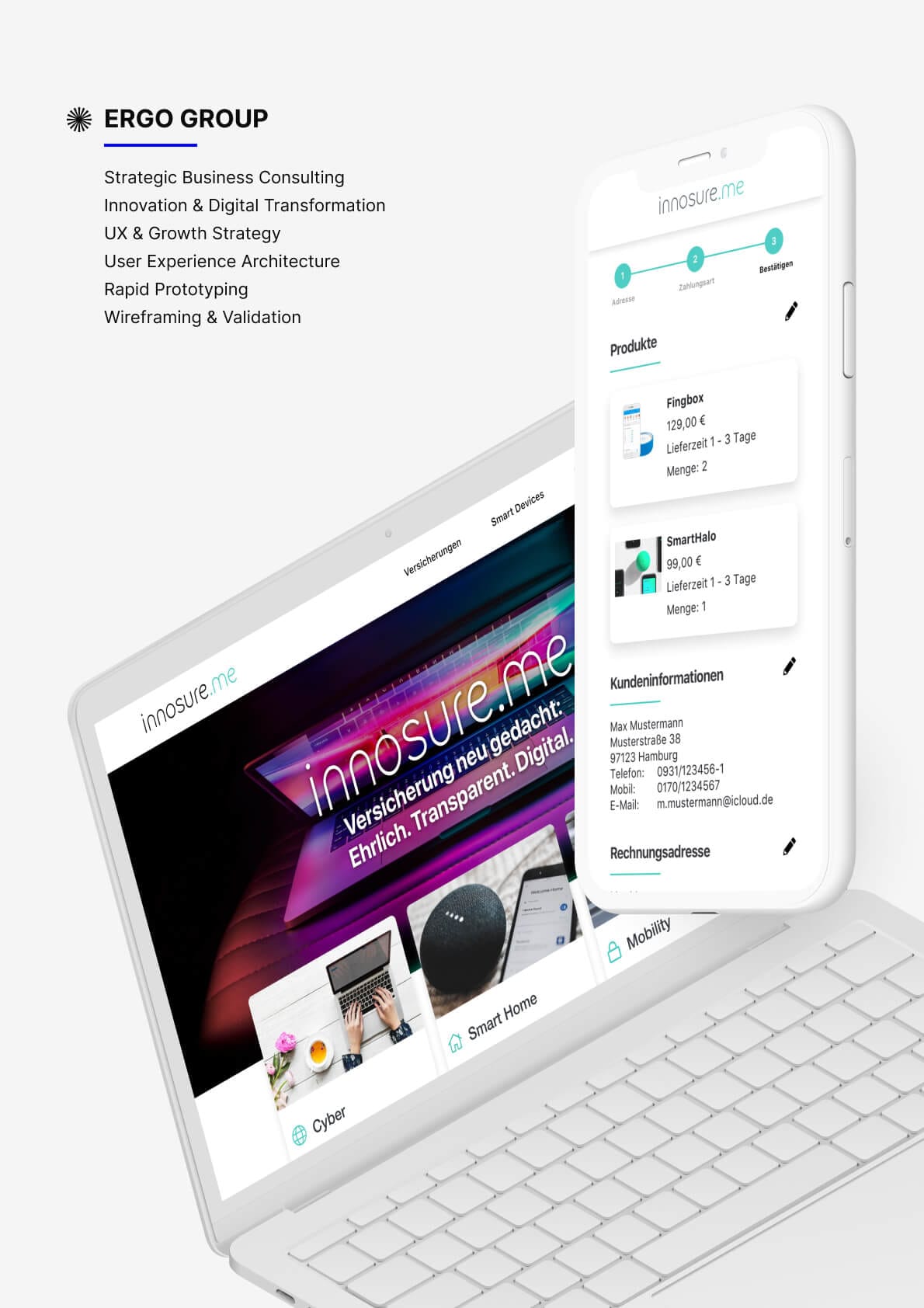
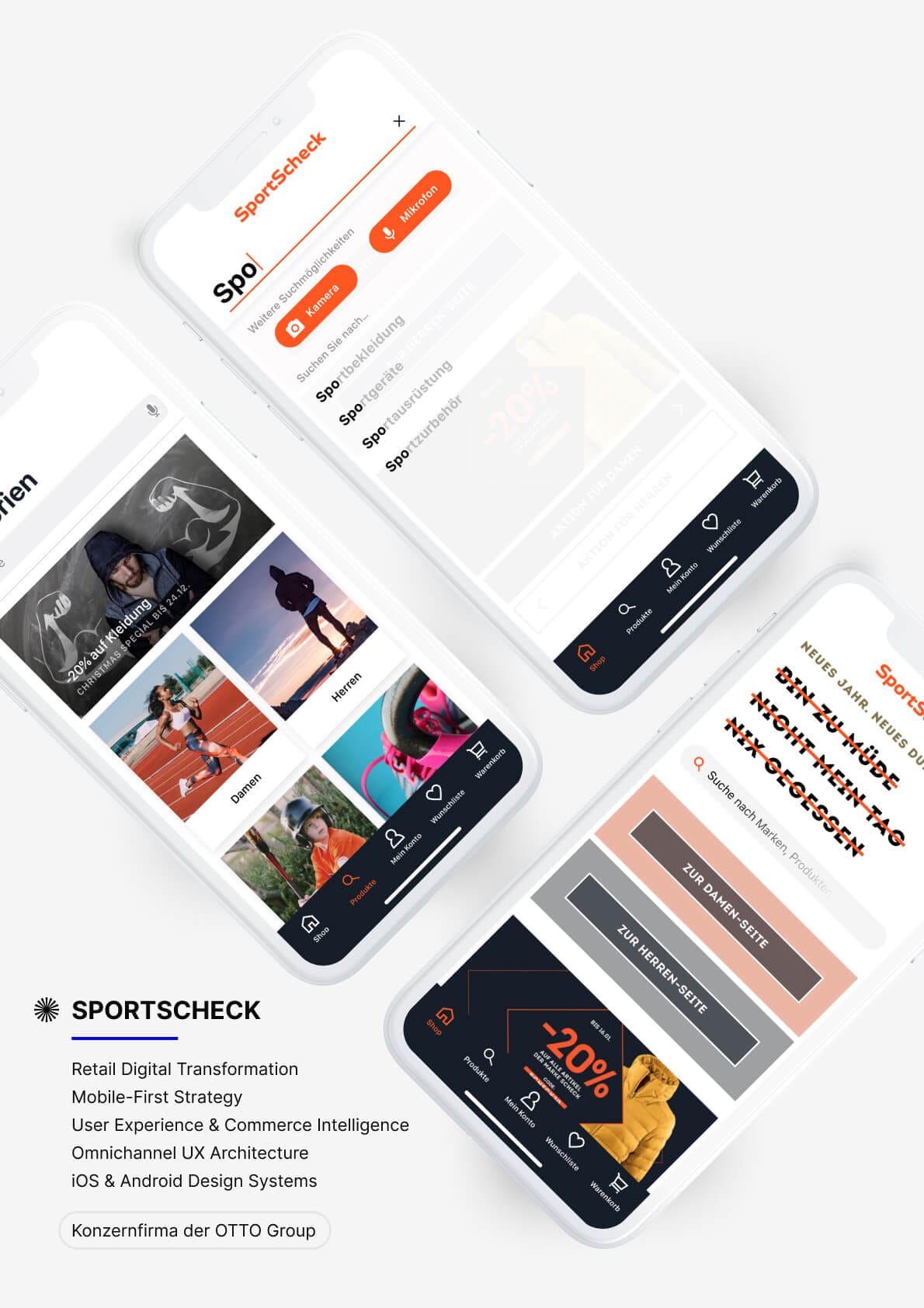
When I worked for ERGO Group AG, a lot of different people sat in one room. Every department had its own language, its own priorities, and everyone had a different idea of what “digital” means. The C-level at Dr. Oetker Digital wanted “innovation”, but nobody could explain what that meant for users. For the OTTO Group I had to design mobile UX for three brands: three different audiences, three different expectations, one design system.
The real challenge was never the technology. It was translation. Between worlds that don't speak the same language.
How do you take complex organizations digital without overwhelming teams and frustrating users?
02 ✺ SOLUTION
As little as possible, as much as necessary
I'm the interface between:
- Business and engineering
- C-level and users
- Vision and reality
I connect what others keep apart: in design, AI and product development.
How I simplify complexity in organizations
#1: Translating user problems into C-level language
I sat in a room full of stakeholders and explained why “more features” isn't the answer. The language of the C-level is ROI, time to market, scaling. The language of users is frustration, wasted time, “I don't get this”.
I translate between these worlds, and I build bridges between them.
In practice that means turning user research findings into business cases. Converting user frustration into lost revenue. Translating feature requests into prioritized roadmaps.
- Showing ERGO Group AG, a traditional insurance group, that “digital” means “less complexity” instead of “more features”.
- A startup venture under the Dr. Oetker umbrella wanted to scale fast, with all the opportunities and challenges that corporate backing brings. Fast growth, but with the expectation of meeting corporate standards.
The result? Decisions that work for business and users alike. I don't tell either side what they want to hear. I show both of them that their goals aren't that different after all.
#2: Design systems for clarity that scales
A design system is a tool for the whole organization. The pixels come second.
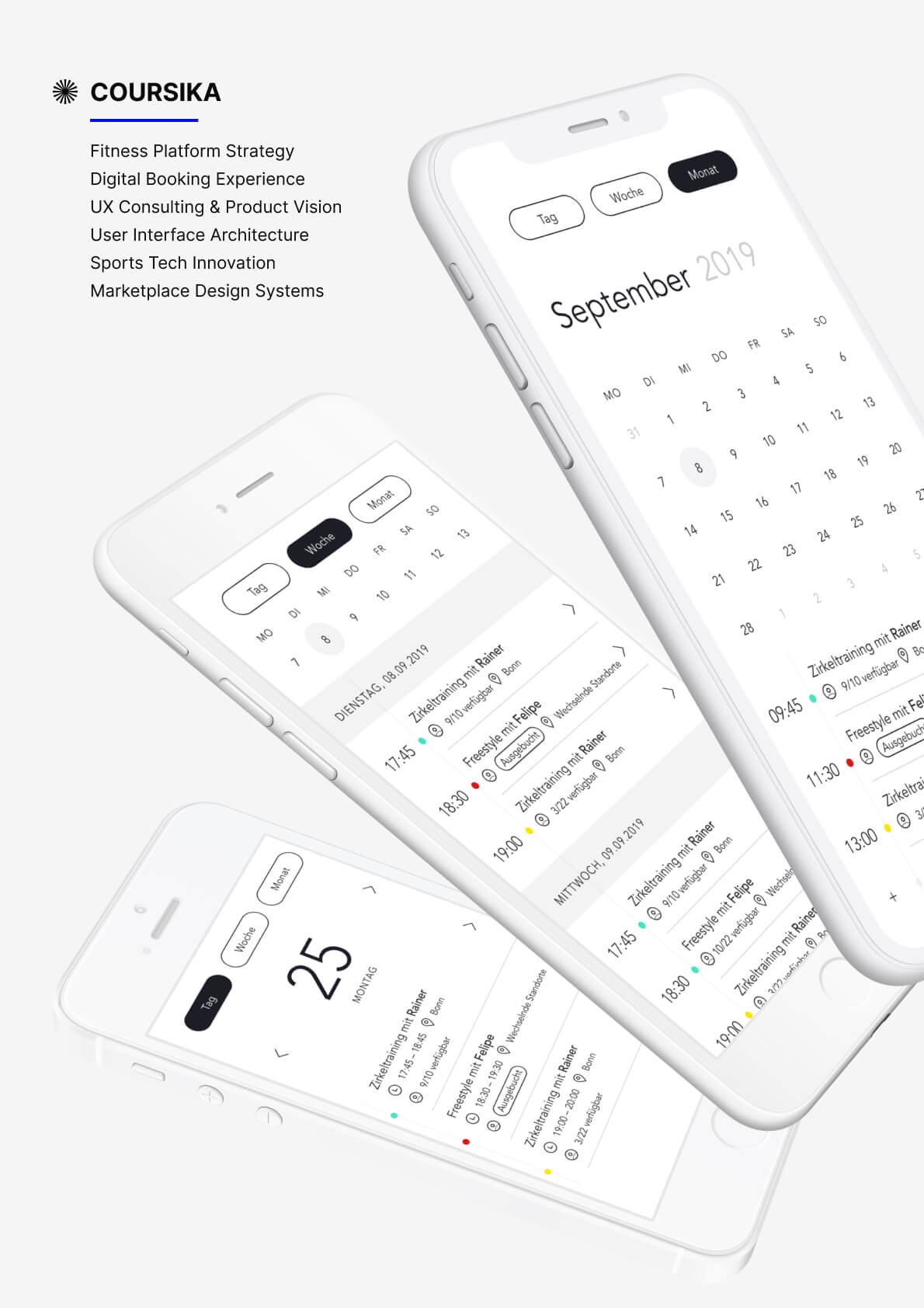
ERGO Group AG had worked in silos for decades and didn't need more tools. It needed a shared language. The design system became exactly that. Hundreds of components, and I don't collect them for fun. Each component is a decision that teams no longer have to make again.
A fast-scaling venture at Dr. Oetker Digital didn't need a design playground. It needed a system that grows with it. Cross-functional teams of designers, developers and product owners had to speak the same language. The design system was that language.
The real value? Time. A design system saves work on the next feature. It also saves the endless debates about what that feature should look like. Coordinating mobile UX for three OTTO Group brands at once would have been chaos without a system. With a system it was controlled consistency.
#3: Orchestrating cross-functional teams instead of commanding them
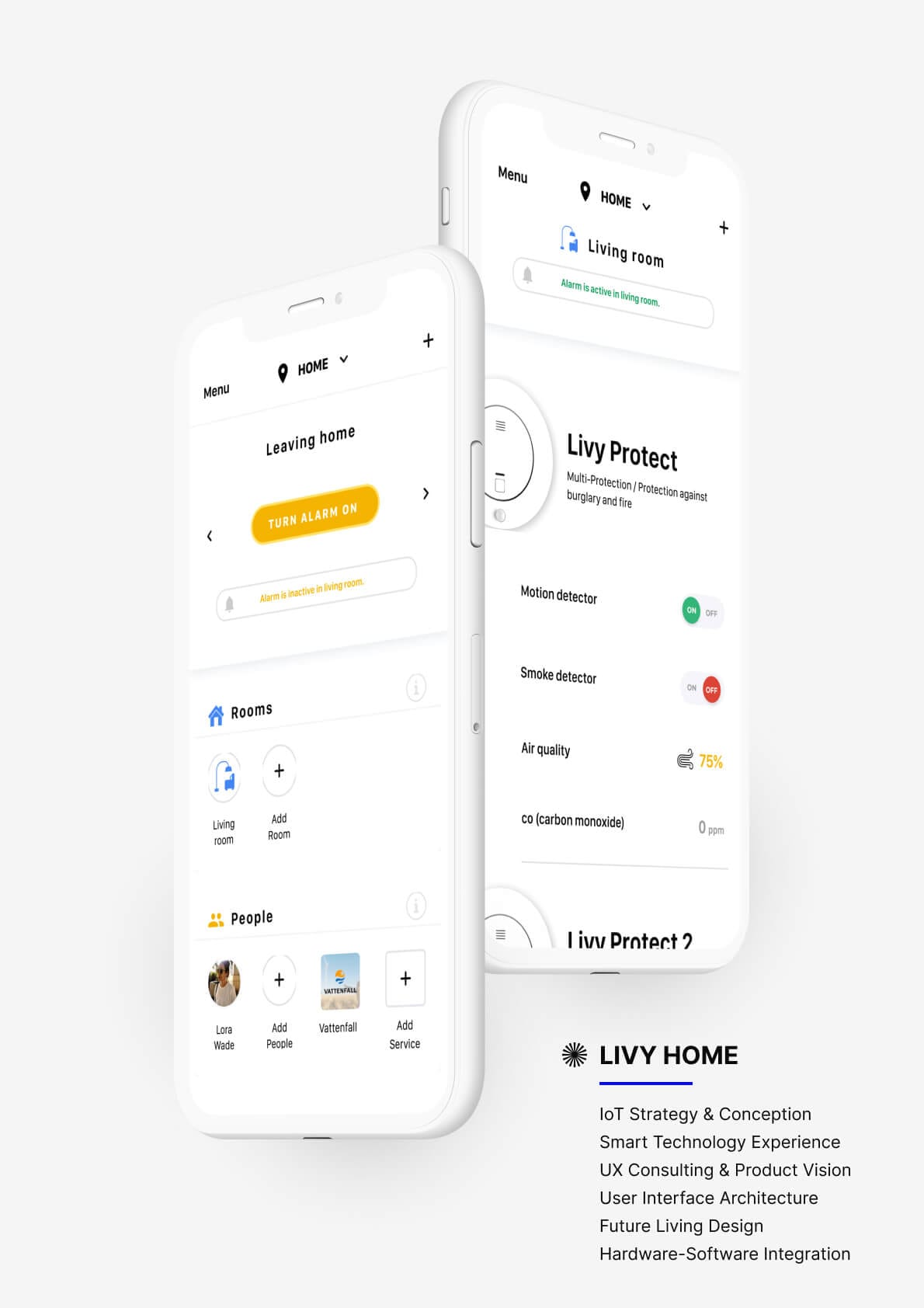
For an Internet of Things startup with a strategic investment from the Swedish energy company Vattenfall, I designed smart home UX that works without a manual. Sounds simple, right? It wasn't. Developers wanted to show lots of features. Business wanted to launch fast. Security wanted triple confirmation for every action.
Startup agility with corporate responsibility. Security couldn't make compromises, but the launch had to happen fast.
I was caught right in the middle. And that's exactly where I belong.
Cross-functional coordination means aligning everyone on one shared goal. Here the goal was to bring security and convenience together instead of playing them off against each other. No manual means the interface itself becomes the teacher.
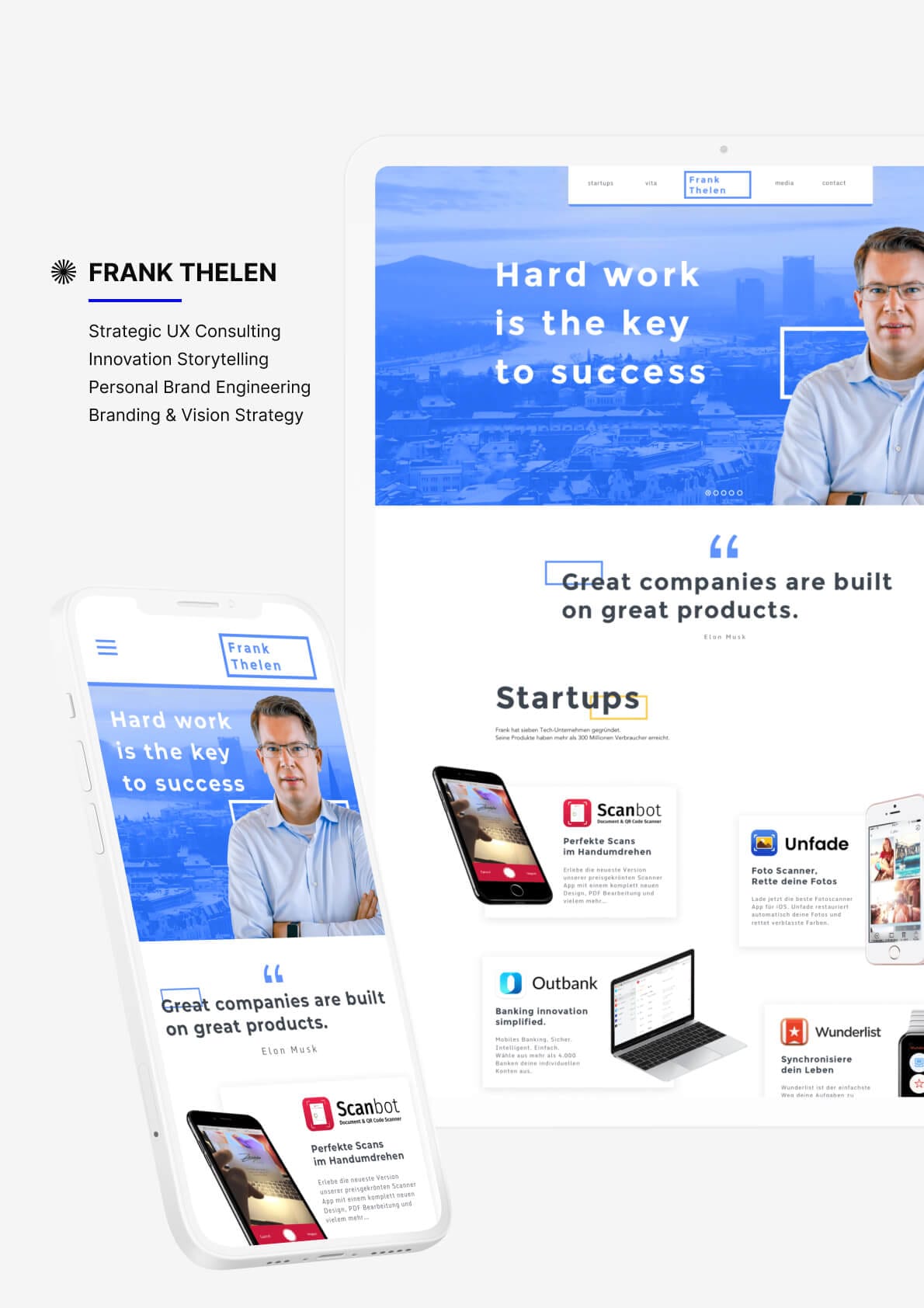
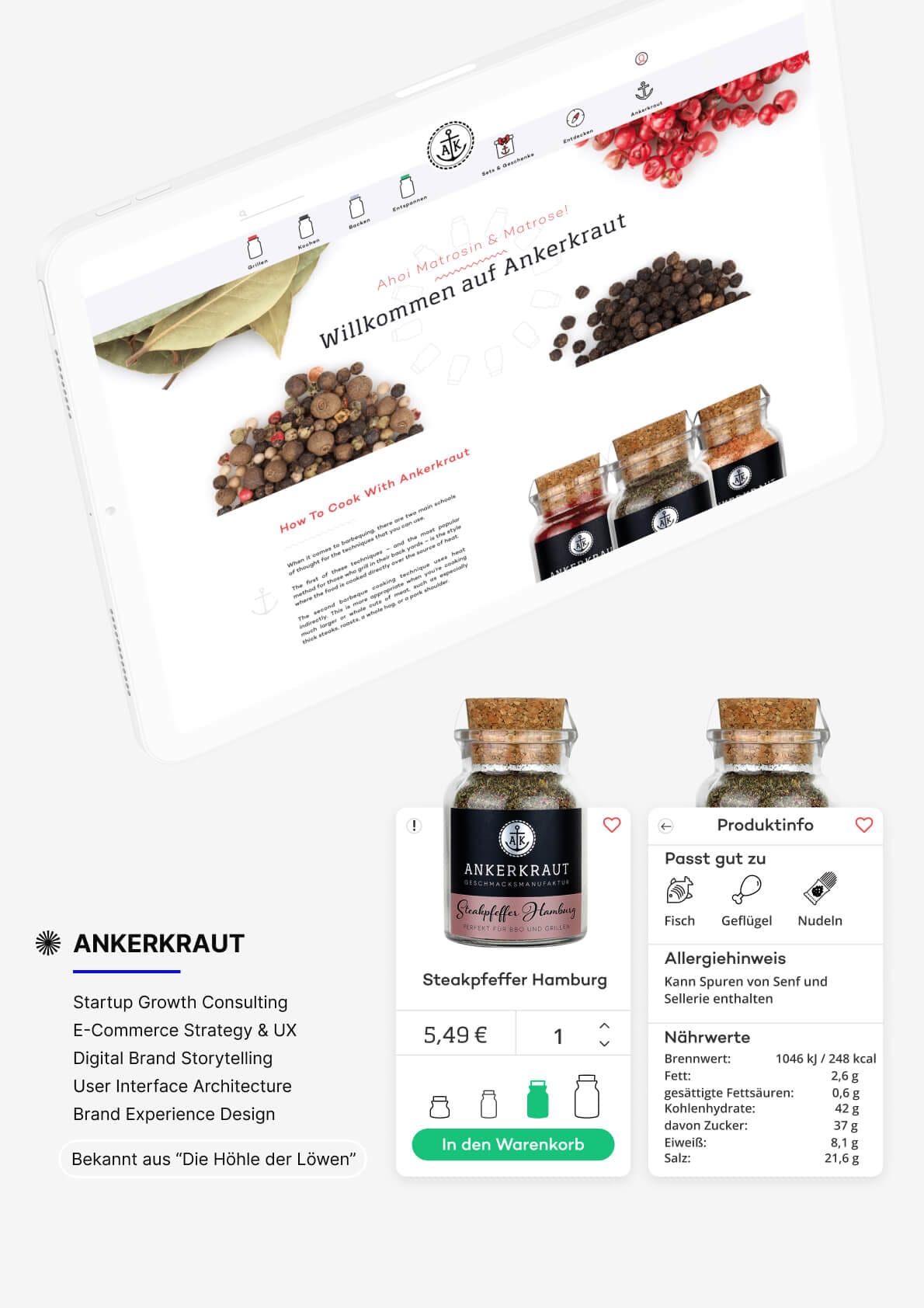
For the German tech investor Frank Thelen, it was about his entire investment ecosystem: Ankerkraut, Luicella's and more. Every brand had its own identity, but all of them were supposed to feel like “Thelen”. I translated his personal brand into scalable digital experiences. That meant coordinating teams that had never worked together before. Turning visions into features.
The method? Precise feature prioritization instead of generic solutions. I pushed that through at the OTTO Group: not every feature idea is a good idea. Some are just loud.
Today with artificial intelligence: iterate faster, coordinate better
I've worked with AI every day since 2022. The hype has nothing to do with it. It changes how I work.
What AI means in my UX work today:
- User research in days instead of weeks: With LLMs I analyze user feedback, interview transcripts and support tickets in hours. What used to mean weeks of manual analysis takes days today.
- Prototyping with AI: From wireframe to clickable prototype with AI-powered tools. Iterate faster, try more, decide better.
- Design system coordination across teams: AI tools help me update documentation automatically, find inconsistencies and keep teams in sync, without endless meetings.
- Data-driven decisions in real time: What used to be gut feeling is a data point today. Artificial intelligence helps me spot patterns in user behavior before they turn into problems. That's the biggest business impact. Faster iteration means faster learning, and better coordination means less friction and fewer wasted resources.
- Better cross-functional communication: I use AI to turn technical documentation into plain language for stakeholders. Automated reports mean more time for strategy and less for PowerPoints.
The principle stays the same: I simplify the complicated. Only faster today. More precise. More scalable.
You'll find more about how I integrate artificial intelligence in my AI showcase. There I show in concrete terms how I build AI-powered systems myself, rather than only using tools.
03 ✺ IMPACT
From startups to DAX corporations: change through strategic simplification
Since 2009 I've worked for 15+ companies. Bootstrapped startups, VC-funded scale-ups, mid-sized businesses, DAX corporations. The industries? Energy, e-commerce, insurance, food tech, consumer tech. The challenges? Always different. The solution? Always the same: strategic simplification.
Projects that show how I work
- Vattenfall digital venture: Smart home UX without a manual. Security and convenience combined. An interface that teaches instead of puzzling people.
- Frank Thelen ecosystem: His personal brand turned into scalable digital experiences for Ankerkraut, Luicella's and more. Consistency across brands without losing identity.
- OTTO Group: Mobile UX for three brands. Feature prioritization for millions of users. Precise decisions instead of generic compromises.
- ERGO Group AG: Digital transformation of a traditional insurance group. Established a design system. Coordinated cross-functional teams that used to work in silos.
- Dr. Oetker digital venture: Enterprise scaling for a fast-growing venture. Translated user problems into C-level language. Orchestrated cross-functional teams.
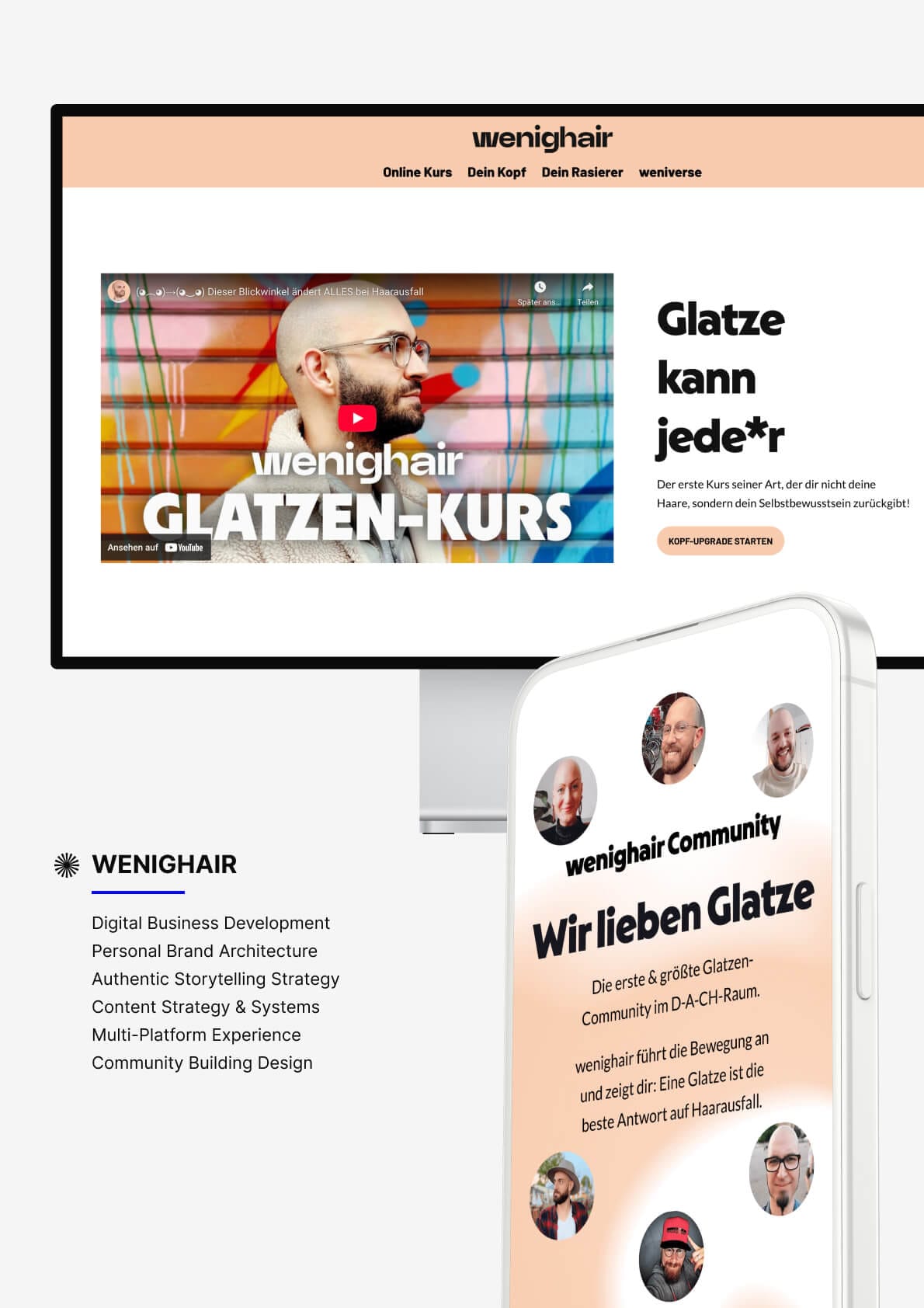
- wenighair (my own startup): Since 2019 I've been building here what I do for large corporations. SEO system with 1,000+ keywords on page 1. AI integration since 2022: I trained an AI chatbot on support data, scaled affiliate marketing with AI and automated workflows. Data-driven product development from zero to scalable online courses. This is where I did the building myself. And the failing. And the learning.
The common thread?
I'm the interface. Between business goals and user needs. Between C-level vision and developer reality. Between “This is what we want to build” and “This is what users really need”.
Teams I've coordinated: from five-person startup teams to larger projects in corporations. Always with the same principle: orchestrate, don't command.
Today with AI:
- Research time: Cut from weeks to days
- Design system upkeep: Automated, consistent, scalable
- Data-driven decisions: In real time instead of after the fact
- Prototyping speed: Test more, learn faster, deliver better
The result is a better user experience, and better business along with it. Faster time to market. Happier teams. And above all: users who understand what they're actually using.
04 ✺ TAKEAWAYS
What has worked since 2009
- Change starts with clarity, technology comes second
The best tech stack is useless if nobody knows what it's for. I always start with one question: what do users really need? Everything else is a distraction. - Design systems are tools for the whole organization
A good design system saves decisions, meetings and endless debates about button colors. Saving pixels is the least of it. - The interface between worlds is the most valuable place
Business and users don't speak the same language. I translate, and that's exactly where the value comes from. - Precise feature prioritization beats generic solutions
Not every feature idea is a good idea. Some are just loud. Focus means saying no. A lot. - UX + AI = research in days, coordination across teams, iteration in real time
I keep my own hands on the controls. But AI is the best copilot I've ever had. Iterate faster. Coordinate better. Decide based on data.
Does every department speak its own language in your AI meetings?
Tell me who's at the table with you. Right in the middle of all those people is where I feel at home, and I'd most like to be there as a permanent part of your team.