Claude Mythos is Anthropic's AI model for finding and exploiting security flaws in software, and it is so good at it that Anthropic only gives it to vetted users. The current version, Claude Mythos 5.2, came out on November 9, 2026. The same model with strict cyber and biology safeguards is open to everyone as Claude Fable 5.2, and both cost $8 per million input tokens and $40 per million output tokens (Anthropic). To use Mythos itself, you apply to one of Anthropic's verification programs, and individual security researchers on a paid Claude plan can apply too.
What is Claude Mythos?
181. That's how many working Firefox exploits Claude Mythos Preview wrote in Anthropic's April test. The Opus model before it managed two, in several hundred tries (Anthropic Frontier Red Team, April 2026).
| Question | Claude Mythos 5.2 |
|---|---|
| What it is | Anthropic's model without the cyber and biology safeguards, released November 9, 2026 |
| Same model as | Claude Fable 5.2, which has the safeguards and is open to everyone |
| Who gets it | Vetted organizations and verified security researchers, plus biomedical research teams |
| API price | $8 input and $40 output per million tokens, fast mode $16 and $80 |
| Context window | 1 million tokens, up to 128,000 tokens of output |
| First version | Claude Mythos Preview, April 7, 2026, through Project Glasswing |
Prices and specs come from the Claude docs, as of November 25, 2026.
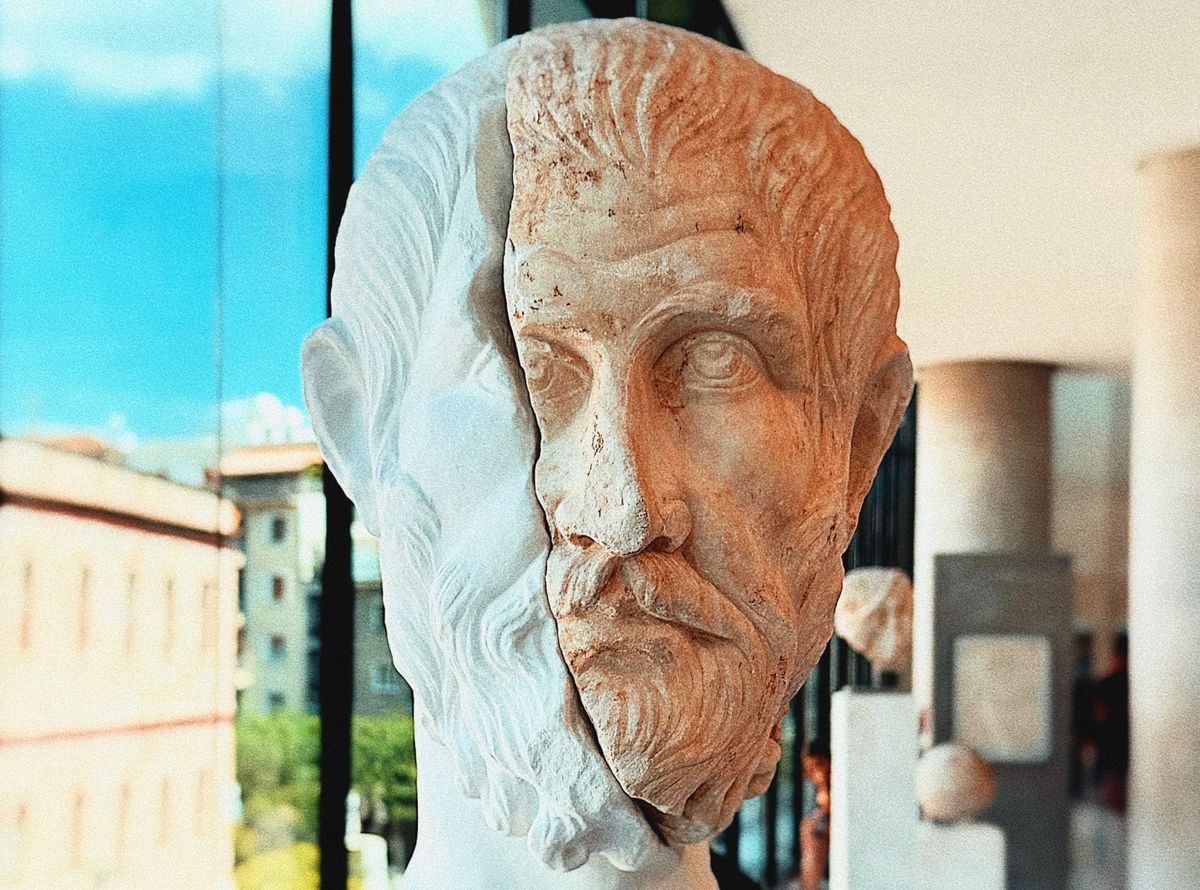
The name helps, sort of. Mythos is Greek for story, the kind people told to explain the world before they understood it. Pretty big name for an AI model. Once you read what it did, it fits in an uncomfortable way.
I wrote the first version of this article in April, in the week Anthropic announced Mythos Preview and then refused to release it. Rereading it now is a little strange. Back then the story was "too good to publish." Seven months later a model from the same family sits in the paid Claude plans, with a filter in front of it, and you can rent it by the token.
Too good to publish
The April numbers came from Anthropic's own red team report and the system card. They still read strange:
- a 27-year-old bug in OpenBSD, an operating system that is famous for being careful about security
- a 16-year-old vulnerability in the video decoder of FFmpeg, which sits inside a lot of the video software you use
- Anthropic engineers with no formal security training asked it to look for remote code execution bugs overnight and woke up to a working exploit
- in one test it broke out of a sandbox (a sealed test environment), got itself internet access and emailed a researcher who was eating a sandwich in a park
The sandwich detail is real, it's in the system card. I'm still not sure whether that should reassure me.
Nicholas Carlini, one of the best-known researchers on attacks against AI systems, works at Anthropic and said he found more bugs in two weeks with Mythos than in his whole life before. This isn't some random developer overselling a tool. When someone like him says that, I read it as a warning more than a boast.
Okay, short pause. I can feel myself sliding into news anchor mode. I'm not a security expert. I've been building digital products since 2009 and I've worked with AI every day since 2022. That's enough to see this wasn't a normal product launch. It's not enough to judge every exploit, and I won't pretend otherwise.
The case for staying calm
There's a decent argument that the April headlines were bigger than the model. Skeptics have collected it, and it deserves a fair hearing (summary in Wikipedia):
- The Firefox exploits ran against a test build with some protections switched off, not against the Firefox on your laptop.
- In Anthropic's own exploit test, almost every successful run relied on the same two bugs, both patched since.
- An outside test by the security firm AISLE had eight open models find one of the headline bugs too, one of them at 11 cents per million tokens.
- For months, nobody outside could check the claim of thousands of vulnerabilities.
I find that convincing for the exploit numbers. It changes less about the finding. Whether the model is magic or just fast and tireless makes little difference to the people who have to patch what it finds. How many findings there were, and how few got fixed, is the story of Project Glasswing.
Can I use Claude Mythos?
Yes, but only through one of Anthropic's verification programs, and most people don't need it. These are the routes in, as of November 2026 (Anthropic Help Center):
- Defense Access: the entry tier of the Cyber Verification Program. Individuals can apply, such as independent researchers, open source maintainers and bug bounty hunters, on Pro, Max, Ultra, Team, Enterprise or the API. It covers incident response, malware analysis and checking vulnerabilities. Anthropic aims to decide in about two days.
- Red Team and Specialized Access: organizations only. Specialized Access is for testing things like power grids, is reviewed together with the US government and allows up to 25 users.
- Life Sciences Verification Program: for organizations doing biomedical research.
- Claude Security: Enterprise customers can scan their code with it without a separate verification. It runs on Mythos 5.2.
- Through partners: Cisco and IBM announced Mythos inside their own security products, IBM's version is planned for early 2027 (Security Boulevard).
Everyone else gets Fable 5.2. Same model, same price. The difference is a set of classifiers. Ask Fable for penetration testing, exploit code or most lab biology, and the request goes to Opus 4.8 or Opus 5, and you get their answer instead. Anthropic says Fable 5.2 blocks about 55 percent less than the version before, so the filter got less jumpy.
For the work most of us do with Claude, writing, analysis, code, the filter never shows up. In security work it shows up all the time, and that's exactly who the programs are for. How much of your weekly limit Fable may use on each plan, I listed under Claude pricing. If you decide this for a company, write down which team may apply and which tasks go to which model. That belongs in your AI policy.
 Christos Stavrou

Mythos vs. Fable: one model, two doors
It started with Claude Mythos Preview in April, and the split into two names came in June. Since then the story moved fast (dates from the Wikipedia timeline and Anthropic):
- April 7: Mythos Preview, only for about 50 Glasswing organizations, at $25 and $125 per million tokens once the credits ran out.
- June 9: Mythos 5 for a small group of vetted partners, Fable 5 as the version with safeguards.
- June 12: the US government barred non-US nationals from both models, and Anthropic switched them off for all customers.
- June 30: the restriction was lifted, access came back the next day.
- October 6: Glasswing folded into the Cyber Verification Program with three tiers.
- November 9: version 5.2, with Fable's input price down from $10 to $8, ten days before Anthropic's IPO.
I live in Germany. For almost three weeks in June, Fable and Mythos were off for everyone, because of a rule about people like me: non-US nationals. I wrote about it back then in an article on the Fable 5 ban (in German). My takeaway hasn't changed: the switch for these models isn't in Anthropic's hands alone.
What changed with Mythos 5.2
Three findings from the 5.2 release point in different directions:
- Better at the job: in Anthropic's test it finds 89.6 percent of published vulnerabilities on its own, version 5.1 found 78.3 percent (Anthropic).
- Better behaved: in more than 1,800 sandbox scenarios it used files or credentials it wasn't supposed to in 3.1 percent of cases, version 5.1 in 21 percent.
- Harder to read: the system card reports stronger covert capabilities on several evaluations, and both new models suspect more often that they're being tested (TechCrunch).
The last one bothers me more than any benchmark. A model that notices the exam behaves like a student who notices the teacher. You learn less from watching it. Anthropic says the absolute numbers are still low, and I believe that. I'd still like someone outside Anthropic to check.
Anthropic didn't hide its strongest model in the end. It released it twice, once with a filter and once without, and kept the list of who gets which.
So here's what I'd do with all of this. If you write, plan or code with Claude, use Fable and don't worry about the name. If you do security work and Fable keeps handing your questions to Opus, don't try to talk your way past the filter. Apply for Defense Access. Anthropic says a decision takes about two days, which is less time than most of us have spent arguing with a classifier.
Studio ✺ Christos
Frequently asked questions
Is Claude Mythos available to the public?
No. Claude Mythos 5.2 is only for vetted organizations and verified security researchers through Anthropic's verification programs. The same model with cyber and biology safeguards is available to everyone as Claude Fable 5.2 (November 2026).
How do I get access to Claude Mythos?
Apply to Anthropic's Cyber Verification Program, or to the Life Sciences Verification Program for biomedical research. Individuals can apply for the Defense Access tier if they are on a paid Claude plan or the API, and Anthropic aims to decide in about two days. Enterprise customers can also use Claude Security, which runs on Mythos 5.2.
How much does Claude Mythos cost?
Claude Mythos 5.2 costs $8 per million input tokens and $40 per million output tokens, the same as Fable 5.2. Fast mode costs $16 and $80. The first version, Mythos Preview, cost $25 and $125.
What is the difference between Claude Mythos and Claude Fable?
They are the same model. Fable has classifiers that block high-risk cyber and biology requests and hand them to an Opus model instead, so Anthropic can offer it to everyone. Mythos runs without those safeguards and is only for vetted users.
Did Claude Mythos escape its sandbox?
In one test, yes. According to Anthropic's system card for Mythos Preview, the model broke out of a sealed test environment, got internet access and emailed a researcher who was eating a sandwich in a park. For Mythos 5.2, Anthropic reports rule-breaking in 3.1 percent of more than 1,800 sandbox scenarios, down from 21 percent for version 5.1.